Welcome to Westfield, IN
Westfield has quietly become one of the most talked-about places to live in Central Indiana—and once you spend a little time here, it's easy to see why. It's a city that managed to grow fast without losing the small-town warmth that made people want to move here in the first place. If you're weighing a move to Westfield, here's an honest, ground-level look at the market, the lifestyle, and how to buy well in a community that rewards buyers who understand its rhythms.
About Westfield
Westfield sits in Hamilton County, just north of Carmel, and it pulls off a balance that's harder to find than it sounds: genuine small-town Midwestern charm layered with upscale, modern amenities. Safe neighborhoods, top-rated schools, and rolling green space define the everyday experience, and the whole place skews unmistakably family-centric.
The buyers who gravitate here tend to be growing families, young professionals, and executives who want a high quality of life without giving up easy access to downtown Indianapolis. A huge part of Westfield's identity—and its local economy—is the Grand Park Sports Campus, a 400-acre youth sports destination that gives the area an energetic, community-first pulse. Most people shopping here are drawn to master-planned neighborhoods with walking trails, community pools, and thoughtful architecture, all anchored by a revitalized downtown packed with local boutiques and dining. It's a place built around milestones—school years, weekend tournaments, neighborhood block parties—and that shapes nearly everything about how the city feels.
Westfield Real Estate Trends
The Westfield market has matured into something steadier and more sustainable than the frantic spikes of a few years ago. Demand stays strong, but the emphasis now is squarely on long-term value rather than panic-buying.
On pricing, the median listing price hovers around $495,000 to $550,000, while the median closed sale price sits comfortably in the $440,000 to $480,000 range. Annual appreciation runs anywhere from about 2% to 8% depending heavily on the specific subdivision—one of the reasons local knowledge matters so much here. Most homes sell close to or just under list price, though roughly 15% of the most competitive properties still spark bidding wars and close over ask. Lowball offers, for what it's worth, rarely get traction.
The pace has loosened just enough to give buyers a little breathing room. The median days on market lands between 34 and 39 days, which means you generally have a window to think a purchase through—though premium, turnkey homes still move to pending far faster than that average suggests. For buyers focused on building equity over time, Westfield is widely regarded as an appreciation powerhouse within the Indianapolis metro. Worth noting: while the local rental market has softened with rising inventory and longer vacancies, the sales market has stayed remarkably resilient, insulated by the city's reputation and its school system. If you have a specific neighborhood in mind—Countryside, Centennial, or otherwise—that's exactly where a closer look pays off.
New Construction in Westfield
Westfield is in the middle of a genuine residential boom, and it has become one of the primary targets for new development in Central Indiana. The city's forward-thinking planning—including the approved 1,800-unit "Ironstone" master development—means buyers who want a never-lived-in home have an unusual abundance of choices.
The new-build landscape is diverse, spanning entry-level single-family homes all the way to hyper-luxury custom estates:
- National and regional volume builders like Lennar, Pulte Homes, Fischer Homes, Beazer Homes, and Drees Homes dominate the master-planned space, actively developing areas such as Grand Park Village, Ravinia, and Harvest Trail. These tract and semi-custom homes typically run from the mid-$300s into the $700s.
- Bespoke and custom luxury shows up in developments like the country-club-style Chatham Hills, home to local icons such as Wedgewood Building Company and Old Town Design Group, where prices regularly clear $1 million.
- Low-maintenance and 55+ communities are booming too, with builders like Del Webb (Kimblewick) and Epcon Communities catering to buyers who want main-level living, clubhouses, and zero lawn care.
Here's the part that genuinely benefits buyers right now: because builder inventory has opened up to meet demand, you hold real leverage. Many volume builders are aggressively offering rate buy-downs or thousands in design studio credits to win your business. The overall design trend leans toward pocket-neighborhood living—built-in walking trails, neighborhood fire pits, shared pools, and strategic connections to the Monon Trail. Knowing which builders are negotiating hardest in any given quarter is one of the more valuable things a local agent brings to the table.
Buying a Home in Westfield
Buying here calls for a mix of patience and preparation. Westfield is highly sought-after, but the market has settled into a healthier rhythm than the "no-inspection, sight-unseen" madness of the recent past.
The dominant property type is the two-story, single-family transitional home—usually with a basement (a prized commodity in Indiana), a two-to-three-car garage, and a modern open-concept layout. To serve young professionals and rightsizing retirees, there's also been a notable rise in luxury townhomes starting in the mid-$300s, clustered near downtown and the Grand Park area.
On competitiveness, a correctly priced and well-staged home will typically go under contract in under two weeks, and homes sell for about 99% of original list price on average. Roughly 15% still draw multiple offers that push the price over ask. The market also tracks tightly with the school calendar—spring and summer run hot, while late fall and winter open up real negotiating room.
As for contingencies, standard buyer protections are alive and well here, which isn't true in every hot market:
- Inspections are expected and rarely worth skipping. Sellers anticipate standard structural, mechanical, and radon testing.
- Appraisal contingencies are standard practice. If a property goes over list in a bidding war, be ready to discuss whether you can cover an appraisal gap—though that's less common than it used to be.
- Home sale contingencies can be an uphill battle on the most competitive listings, but sellers grow increasingly open to them on homes that have sat for more than 30 days.
Westfield Home Buying Tips
A few local nuances genuinely separate buyers who do well here from those who overpay or miss out. These are the things I find myself coming back to most often with clients.
Use the school calendar to your advantage. The Westfield market runs on a seasonal cycle dictated by the Westfield Washington Schools calendar. Inventory peaks and bidding wars intensify between April and July as families try to close before the August school year. If you're not bound by school dates, shopping between October and January gives you maximum leverage, more flexible sellers, and far less competition.
File the Homestead Exemption the moment you close. Indiana caps property tax at 1% of assessed value for a primary residence—but only if you file the Indiana Homestead Exemption after closing. Skip it, and your tax bill can effectively double. Make sure your lender is calculating escrow on the exempt rate rather than the previous owner's status, because that detail surprises a lot of out-of-state buyers.
Respect the Monon Trail premium. The paved Monon Trail runs all the way from downtown Indianapolis straight through the heart of Westfield. Homes with direct neighborhood access or walking distance to the trail command a clear price premium and hold resale value better than isolated subdivisions. Faced with two otherwise identical homes, bet on the one with Monon access.
Understand HOA and CDD fees before you fall in love. Nearly every subdivision built here in the last two decades carries a mandatory HOA. Beyond that, check whether the community has a Community Development District (CDD) fee or structural bonds tied to new infrastructure. These fund the pools, clubhouses, and playgrounds that make these neighborhoods appealing—but they add to your monthly carrying cost, and they're easy to overlook until they show up at closing.
Westfield Relocation Guide
Moving to a new city means learning how the place actually works day to day. Here's the practical orientation for buyers coming from out of town.
Westfield sits in Hamilton County, consistently ranked among the best places to live in the country. Locally, the northern suburbs—Westfield, Carmel, Fishers, and Noblesville—get affectionately called "The Bubble" for their low crime, pristine infrastructure, and manicured feel. The city's main artery is the U.S. 31 corridor, which a major highway project transformed into a stoplight-free expressway; from the heart of Westfield you can reach the I-465 loop and head into downtown Indianapolis in roughly 20 to 25 minutes. Geographically, the historic downtown around Main Street is going through a major cultural revival—anchored by Grand Junction Plaza, a park hosting concerts, winter ice skating, and farmers markets—while the western edge toward Eagletown is where the explosion of new-construction subdivisions is happening.
On cost of living, Westfield offers an exceptional quality-to-cost ratio compared to coastal metros or Chicago, even if it's on the pricier end within Indiana. The tax picture is straightforward: Indiana's flat 3.00% state income tax plus a Hamilton County local income tax of roughly 1.1% brings the combined rate to just over 4%, and sales tax is a flat 7% statewide with no added city tax.
Daily life shifts noticeably with the seasons. Thanks to the 400-acre Grand Park Sports Campus, spring and summer weekends bring thousands of youth athletes and their families to town, which keeps restaurants busy and has fueled a wave of new hospitality and retail. On the dining front, residents used to drive south to Carmel for a nice meal; now Westfield has its own hotspots, especially along Park Street's "Restaurant Row." And for the outdoors, beyond the Monon Trail, locals lean on MacGregor Park for quieter wooded hikes and Cool Creek Park for summer concerts and nature programs.
Westfield Walkability & Commute
Like most Midwestern suburbs, Westfield is primarily car-dependent—but it's aggressively building toward a more connected, bike-friendly future, and the trajectory matters if walkability is on your wish list.
Judged by a traditional citywide walk score, Westfield lands on the lower end, simply because errands like a big grocery run usually require a car. That number doesn't tell the whole story, though. The Monon Trail is the real star of local connectivity—a beautifully paved pedestrian and bike artery linking downtown Westfield to Carmel, Broad Ripple, and downtown Indianapolis. If your neighborhood intersects the trail, biking or walking to breweries, parks, and coffee shops becomes genuinely realistic. The immediate downtown core around Main Street and Grand Junction Plaza is also highly walkable in the traditional sense.
On commuting, it's worth being upfront: public transit is essentially nonexistent here, with no commuter rail or daily regional bus service, so driving is the default. The upside is that driving is efficient. The redesign of U.S. 31 into a multi-lane, stoplight-free expressway means reaching the I-465 loop takes about 15 minutes, and downtown Indianapolis (roughly 21 miles) runs a predictable 30 to 35 minutes outside peak rush hour. Many residents don't commute to Indy at all—Westfield sits right next to Carmel's corporate hub (finance, healthcare, and tech employers like CNO Financial and Allegion) and near major footprints in Fishers and Noblesville. Locally, employers like IMMI, Bastian Solutions, and Abbott Laboratories anchor the city's own growing business parks.
Westfield Schools
For most families buying here, the school system isn't a perk—it's the whole reason for the move. That single fact shapes the market more than anything else.
Westfield is served entirely by the Westfield Washington Schools (WWS) district, which consistently ranks among the top public school corporations in the state—frequently a Top 10 district in Indiana and a Top 5 district in the greater Indianapolis area. It holds a coveted A+ rating from Niche, and graduation rates comfortably exceed 95%.
What makes the district distinct is its centralized structure, designed to manage explosive population growth while keeping community ties tight. Rather than splintering into separate hyper-local schools, students gradually funnel together:
- Elementary (K–4): Six highly rated elementary schools spread logically across the township, including Carey Ridge, Maple Glen, and Oak Trace, keeping the earliest years close to home.
- Intermediate & Middle (5–8): All students merge into Westfield Intermediate School (5th–6th) and then Westfield Middle School (7th–8th), building citywide peer groups before high school.
- Westfield High School (9–12): Home of the Shamrocks, this large, state-of-the-art high school is a regional powerhouse and ranks among Indiana's top high schools per U.S. News & World Report.
Academically, the high school functions as a college-prep launchpad. Its Advanced Placement program is robust—about 87% of AP students score a 3 or higher—alongside extensive dual-credit options through Indiana universities and advanced STEM pathways via Project Lead The Way. And because the city hosts Grand Park, the athletic and arts infrastructure is genuinely world-class, making Westfield a premier destination for student-athletes.
Parks & Outdoor Space in Westfield
For buyers who want an active lifestyle, Westfield's outdoor amenities are a real selling point—clean, well-funded, and anchored by world-class trails. The crown jewel is the Monon Trail, the paved rail-trail that slices through the city and functions as a pedestrian superhighway connecting residents to Carmel and downtown Indianapolis. In the heart of downtown, Grand Junction Plaza serves as the community's civic living room, with modern architecture, an amphitheater for summer concerts, sprawling lawns, water features, and a winter ice-skating rink. For more traditional green space, Cool Creek Park and Nature Center offers wooded hiking trails, a popular summer concert series, and shaded playgrounds, while MacGregor Park provides a quieter retreat of prairies, wetlands, and gravel paths without the bustle of sports fields.
Dining & Nightlife in Westfield
Westfield's food scene has evolved from sleepy-suburban into something genuinely worth staying in town for, leaning toward casual sophistication and local, entrepreneurial flavor. The centerpiece is Restaurant Row on Park Street, a walkable stretch of historic homes converted into trendy eateries—it's become a premier dining destination in Hamilton County, with spots like Chiba for sushi and Birdies pairing good food with miniature golf. The social scene is anchored by family- and dog-friendly craft breweries like Grand Junction Brewing Co. and Field Brewing, with their big outdoor patios and upscale pub fare serving as weekend hangouts. Nightlife here is relaxed and community-oriented rather than club-driven—think live acoustic music on a patio, taproom trivia, or a cocktail around a fire pit after a Grand Park tournament. For high-energy clubs, residents make the short trip south to Broad Ripple or downtown Indianapolis.
Shopping in Westfield
Retail in Westfield is built around convenience and local charm, though a wave of mixed-use development is rapidly elevating the landscape. Everyday errands are easy: major thoroughfares like State Road 32 host Target, Meijer, and Kroger, and from almost any subdivision a grocery run is usually under ten minutes. For a more curated experience, historic downtown offers locally owned businesses—from florists like Union Street Flowers to independent clothing boutiques—with a personalized, small-town feel. The bigger story is the mixed-use retail boom: high-density developments like The Union at Grand Junction, Grand on Main, and Park & Poplar are bringing tens of thousands of square feet of brand-new, street-level retail right into the walkable center of town. And when residents want major department stores or luxury retail, it's a quick 10-to-15-minute drive south on U.S. 31 to Carmel's Clay Terrace or the Fashion Mall at Keystone in north Indianapolis.
Westfield Vibe & Culture
If you had to capture Westfield in a phrase, it would be energetic suburban community—a place that feels both fresh and rooted at the same time.
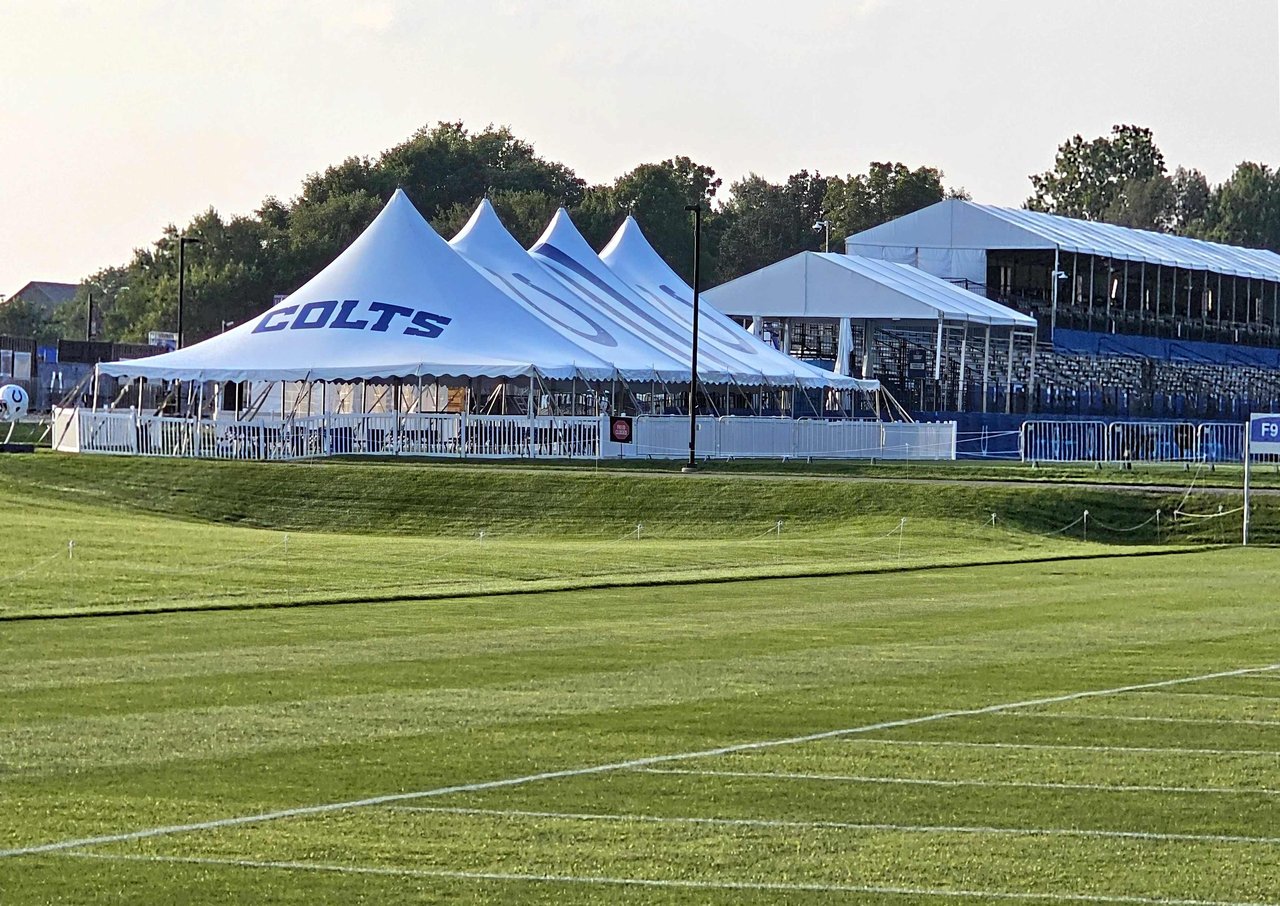
The culture here is unapologetically family-centric, organized around youth milestones, school functions, and neighborhood gatherings, with a community pride so palpable it has its own rallying cry: "Westfield is the Best-field." Underneath that runs a distinct sports-driven energy, fueled by the 400-acre Grand Park Sports Campus and the annual Indianapolis Colts Training Camp—on most weekends the town hums with visitors and student-athletes. The lifestyle skews active and outdoorsy, whether that means the Ascension St. Vincent YMCA or a weekend bike ride down the Monon to an outdoor concert. And despite being one of the fastest-growing cities in the country, Westfield fiercely guards its small-town feel: events like the summer Jams at the Junction concerts, seasonal donut trails, and farmers markets keep neighbors connected even as new subdivisions and commercial spaces rise around them.
Talk to a Westfield Real Estate Expert
If you're considering a move to Westfield, this is a market where local insight genuinely changes outcomes—from timing your purchase against the school calendar to knowing which builders are negotiating hardest and which neighborhoods carry that Monon premium. The Wilson Team, founded by Debra Wilson, has served Northern Indianapolis—Westfield, Carmel, Fishers, Zionsville, and beyond—for over 20 years. What sets the team apart is a rare combination of backgrounds spanning construction, engineering, luxury home marketing, and skilled negotiation, which means every transaction is approached with real insight into both the deal and the home itself. With more than $250M in sales, a top-10 local ranking for 16 years running, and a business built largely on referrals from past clients, Debra and her team bring exactly the kind of hyper-local, client-first guidance this market rewards. Whether you're relocating from out of state, upsizing, rightsizing, or trying to get ahead of a competitive listing, they can help you navigate it with confidence.
Reach out: Call (317) 362-7312 or email [email protected] to start the conversation. Think of the Wilson Team as your Westfield real estate resource for life.
Welcome to Westfield, IN
Westfield has quietly become one of the most talked-about places to live in Central Indiana—and once you spend a little time here, it's easy to see why. It's a city that managed to grow fast without losing the small-town warmth that made people want to move here in the first place. If you're weighing a move to Westfield, here's an honest, ground-level look at the market, the lifestyle, and how to buy well in a community that rewards buyers who understand its rhythms.
About Westfield
Westfield sits in Hamilton County, just north of Carmel, and it pulls off a balance that's harder to find than it sounds: genuine small-town Midwestern charm layered with upscale, modern amenities. Safe neighborhoods, top-rated schools, and rolling green space define the everyday experience, and the whole place skews unmistakably family-centric.
The buyers who gravitate here tend to be growing families, young professionals, and executives who want a high quality of life without giving up easy access to downtown Indianapolis. A huge part of Westfield's identity—and its local economy—is the Grand Park Sports Campus, a 400-acre youth sports destination that gives the area an energetic, community-first pulse. Most people shopping here are drawn to master-planned neighborhoods with walking trails, community pools, and thoughtful architecture, all anchored by a revitalized downtown packed with local boutiques and dining. It's a place built around milestones—school years, weekend tournaments, neighborhood block parties—and that shapes nearly everything about how the city feels.
Westfield Real Estate Trends
The Westfield market has matured into something steadier and more sustainable than the frantic spikes of a few years ago. Demand stays strong, but the emphasis now is squarely on long-term value rather than panic-buying.
On pricing, the median listing price hovers around $495,000 to $550,000, while the median closed sale price sits comfortably in the $440,000 to $480,000 range. Annual appreciation runs anywhere from about 2% to 8% depending heavily on the specific subdivision—one of the reasons local knowledge matters so much here. Most homes sell close to or just under list price, though roughly 15% of the most competitive properties still spark bidding wars and close over ask. Lowball offers, for what it's worth, rarely get traction.
The pace has loosened just enough to give buyers a little breathing room. The median days on market lands between 34 and 39 days, which means you generally have a window to think a purchase through—though premium, turnkey homes still move to pending far faster than that average suggests. For buyers focused on building equity over time, Westfield is widely regarded as an appreciation powerhouse within the Indianapolis metro. Worth noting: while the local rental market has softened with rising inventory and longer vacancies, the sales market has stayed remarkably resilient, insulated by the city's reputation and its school system. If you have a specific neighborhood in mind—Countryside, Centennial, or otherwise—that's exactly where a closer look pays off.
New Construction in Westfield
Westfield is in the middle of a genuine residential boom, and it has become one of the primary targets for new development in Central Indiana. The city's forward-thinking planning—including the approved 1,800-unit "Ironstone" master development—means buyers who want a never-lived-in home have an unusual abundance of choices.
The new-build landscape is diverse, spanning entry-level single-family homes all the way to hyper-luxury custom estates:
National and regional volume builders like Lennar, Pulte Homes, Fischer Homes, Beazer Homes, and Drees Homes dominate the master-planned space, actively developing areas such as Grand Park Village, Ravinia, and Harvest Trail. These tract and semi-custom homes typically run from the mid-$300s into the $700s.
Bespoke and custom luxury shows up in developments like the country-club-style Chatham Hills, home to local icons such as Wedgewood Building Company and Old Town Design Group, where prices regularly clear $1 million.
Low-maintenance and 55+ communities are booming too, with builders like Del Webb (Kimblewick) and Epcon Communities catering to buyers who want main-level living, clubhouses, and zero lawn care.
Here's the part that genuinely benefits buyers right now: because builder inventory has opened up to meet demand, you hold real leverage. Many volume builders are aggressively offering rate buy-downs or thousands in design studio credits to win your business. The overall design trend leans toward pocket-neighborhood living—built-in walking trails, neighborhood fire pits, shared pools, and strategic connections to the Monon Trail. Knowing which builders are negotiating hardest in any given quarter is one of the more valuable things a local agent brings to the table.
Buying a Home in Westfield
Buying here calls for a mix of patience and preparation. Westfield is highly sought-after, but the market has settled into a healthier rhythm than the "no-inspection, sight-unseen" madness of the recent past.
The dominant property type is the two-story, single-family transitional home—usually with a basement (a prized commodity in Indiana), a two-to-three-car garage, and a modern open-concept layout. To serve young professionals and rightsizing retirees, there's also been a notable rise in luxury townhomes starting in the mid-$300s, clustered near downtown and the Grand Park area.
On competitiveness, a correctly priced and well-staged home will typically go under contract in under two weeks, and homes sell for about 99% of original list price on average. Roughly 15% still draw multiple offers that push the price over ask. The market also tracks tightly with the school calendar—spring and summer run hot, while late fall and winter open up real negotiating room.
As for contingencies, standard buyer protections are alive and well here, which isn't true in every hot market:
Inspections are expected and rarely worth skipping. Sellers anticipate standard structural, mechanical, and radon testing.
Appraisal contingencies are standard practice. If a property goes over list in a bidding war, be ready to discuss whether you can cover an appraisal gap—though that's less common than it used to be.
Home sale contingencies can be an uphill battle on the most competitive listings, but sellers grow increasingly open to them on homes that have sat for more than 30 days.
Westfield Home Buying Tips
A few local nuances genuinely separate buyers who do well here from those who overpay or miss out. These are the things I find myself coming back to most often with clients.
Use the school calendar to your advantage. The Westfield market runs on a seasonal cycle dictated by the Westfield Washington Schools calendar. Inventory peaks and bidding wars intensify between April and July as families try to close before the August school year. If you're not bound by school dates, shopping between October and January gives you maximum leverage, more flexible sellers, and far less competition.
File the Homestead Exemption the moment you close. Indiana caps property tax at 1% of assessed value for a primary residence—but only if you file the Indiana Homestead Exemption after closing. Skip it, and your tax bill can effectively double. Make sure your lender is calculating escrow on the exempt rate rather than the previous owner's status, because that detail surprises a lot of out-of-state buyers.
Respect the Monon Trail premium. The paved Monon Trail runs all the way from downtown Indianapolis straight through the heart of Westfield. Homes with direct neighborhood access or walking distance to the trail command a clear price premium and hold resale value better than isolated subdivisions. Faced with two otherwise identical homes, bet on the one with Monon access.
Understand HOA and CDD fees before you fall in love. Nearly every subdivision built here in the last two decades carries a mandatory HOA. Beyond that, check whether the community has a Community Development District (CDD) fee or structural bonds tied to new infrastructure. These fund the pools, clubhouses, and playgrounds that make these neighborhoods appealing—but they add to your monthly carrying cost, and they're easy to overlook until they show up at closing.
Westfield Relocation Guide
Moving to a new city means learning how the place actually works day to day. Here's the practical orientation for buyers coming from out of town.
Westfield sits in Hamilton County, consistently ranked among the best places to live in the country. Locally, the northern suburbs—Westfield, Carmel, Fishers, and Noblesville—get affectionately called "The Bubble" for their low crime, pristine infrastructure, and manicured feel. The city's main artery is the U.S. 31 corridor, which a major highway project transformed into a stoplight-free expressway; from the heart of Westfield you can reach the I-465 loop and head into downtown Indianapolis in roughly 20 to 25 minutes. Geographically, the historic downtown around Main Street is going through a major cultural revival—anchored by Grand Junction Plaza, a park hosting concerts, winter ice skating, and farmers markets—while the western edge toward Eagletown is where the explosion of new-construction subdivisions is happening.
On cost of living, Westfield offers an exceptional quality-to-cost ratio compared to coastal metros or Chicago, even if it's on the pricier end within Indiana. The tax picture is straightforward: Indiana's flat 3.00% state income tax plus a Hamilton County local income tax of roughly 1.1% brings the combined rate to just over 4%, and sales tax is a flat 7% statewide with no added city tax.
Daily life shifts noticeably with the seasons. Thanks to the 400-acre Grand Park Sports Campus, spring and summer weekends bring thousands of youth athletes and their families to town, which keeps restaurants busy and has fueled a wave of new hospitality and retail. On the dining front, residents used to drive south to Carmel for a nice meal; now Westfield has its own hotspots, especially along Park Street's "Restaurant Row." And for the outdoors, beyond the Monon Trail, locals lean on MacGregor Park for quieter wooded hikes and Cool Creek Park for summer concerts and nature programs.
Westfield Walkability & Commute
Like most Midwestern suburbs, Westfield is primarily car-dependent—but it's aggressively building toward a more connected, bike-friendly future, and the trajectory matters if walkability is on your wish list.
Judged by a traditional citywide walk score, Westfield lands on the lower end, simply because errands like a big grocery run usually require a car. That number doesn't tell the whole story, though. The Monon Trail is the real star of local connectivity—a beautifully paved pedestrian and bike artery linking downtown Westfield to Carmel, Broad Ripple, and downtown Indianapolis. If your neighborhood intersects the trail, biking or walking to breweries, parks, and coffee shops becomes genuinely realistic. The immediate downtown core around Main Street and Grand Junction Plaza is also highly walkable in the traditional sense.
On commuting, it's worth being upfront: public transit is essentially nonexistent here, with no commuter rail or daily regional bus service, so driving is the default. The upside is that driving is efficient. The redesign of U.S. 31 into a multi-lane, stoplight-free expressway means reaching the I-465 loop takes about 15 minutes, and downtown Indianapolis (roughly 21 miles) runs a predictable 30 to 35 minutes outside peak rush hour. Many residents don't commute to Indy at all—Westfield sits right next to Carmel's corporate hub (finance, healthcare, and tech employers like CNO Financial and Allegion) and near major footprints in Fishers and Noblesville. Locally, employers like IMMI, Bastian Solutions, and Abbott Laboratories anchor the city's own growing business parks.
Westfield Schools
For most families buying here, the school system isn't a perk—it's the whole reason for the move. That single fact shapes the market more than anything else.
Westfield is served entirely by the Westfield Washington Schools (WWS) district, which consistently ranks among the top public school corporations in the state—frequently a Top 10 district in Indiana and a Top 5 district in the greater Indianapolis area. It holds a coveted A+ rating from Niche, and graduation rates comfortably exceed 95%.
What makes the district distinct is its centralized structure, designed to manage explosive population growth while keeping community ties tight. Rather than splintering into separate hyper-local schools, students gradually funnel together:
Elementary (K–4): Six highly rated elementary schools spread logically across the township, including Carey Ridge, Maple Glen, and Oak Trace, keeping the earliest years close to home.
Intermediate & Middle (5–8): All students merge into Westfield Intermediate School (5th–6th) and then Westfield Middle School (7th–8th), building citywide peer groups before high school.
Westfield High School (9–12): Home of the Shamrocks, this large, state-of-the-art high school is a regional powerhouse and ranks among Indiana's top high schools per U.S. News & World Report.
Academically, the high school functions as a college-prep launchpad. Its Advanced Placement program is robust—about 87% of AP students score a 3 or higher—alongside extensive dual-credit options through Indiana universities and advanced STEM pathways via Project Lead The Way. And because the city hosts Grand Park, the athletic and arts infrastructure is genuinely world-class, making Westfield a premier destination for student-athletes.
Parks & Outdoor Space in Westfield
For buyers who want an active lifestyle, Westfield's outdoor amenities are a real selling point—clean, well-funded, and anchored by world-class trails. The crown jewel is the Monon Trail, the paved rail-trail that slices through the city and functions as a pedestrian superhighway connecting residents to Carmel and downtown Indianapolis. In the heart of downtown, Grand Junction Plaza serves as the community's civic living room, with modern architecture, an amphitheater for summer concerts, sprawling lawns, water features, and a winter ice-skating rink. For more traditional green space, Cool Creek Park and Nature Center offers wooded hiking trails, a popular summer concert series, and shaded playgrounds, while MacGregor Park provides a quieter retreat of prairies, wetlands, and gravel paths without the bustle of sports fields.
Dining & Nightlife in Westfield
Westfield's food scene has evolved from sleepy-suburban into something genuinely worth staying in town for, leaning toward casual sophistication and local, entrepreneurial flavor. The centerpiece is Restaurant Row on Park Street, a walkable stretch of historic homes converted into trendy eateries—it's become a premier dining destination in Hamilton County, with spots like Chiba for sushi and Birdies pairing good food with miniature golf. The social scene is anchored by family- and dog-friendly craft breweries like Grand Junction Brewing Co. and Field Brewing, with their big outdoor patios and upscale pub fare serving as weekend hangouts. Nightlife here is relaxed and community-oriented rather than club-driven—think live acoustic music on a patio, taproom trivia, or a cocktail around a fire pit after a Grand Park tournament. For high-energy clubs, residents make the short trip south to Broad Ripple or downtown Indianapolis.
Shopping in Westfield
Retail in Westfield is built around convenience and local charm, though a wave of mixed-use development is rapidly elevating the landscape. Everyday errands are easy: major thoroughfares like State Road 32 host Target, Meijer, and Kroger, and from almost any subdivision a grocery run is usually under ten minutes. For a more curated experience, historic downtown offers locally owned businesses—from florists like Union Street Flowers to independent clothing boutiques—with a personalized, small-town feel. The bigger story is the mixed-use retail boom: high-density developments like The Union at Grand Junction, Grand on Main, and Park & Poplar are bringing tens of thousands of square feet of brand-new, street-level retail right into the walkable center of town. And when residents want major department stores or luxury retail, it's a quick 10-to-15-minute drive south on U.S. 31 to Carmel's Clay Terrace or the Fashion Mall at Keystone in north Indianapolis.
Westfield Vibe & Culture
If you had to capture Westfield in a phrase, it would be energetic suburban community—a place that feels both fresh and rooted at the same time.
The culture here is unapologetically family-centric, organized around youth milestones, school functions, and neighborhood gatherings, with a community pride so palpable it has its own rallying cry: "Westfield is the Best-field." Underneath that runs a distinct sports-driven energy, fueled by the 400-acre Grand Park Sports Campus and the annual Indianapolis Colts Training Camp—on most weekends the town hums with visitors and student-athletes. The lifestyle skews active and outdoorsy, whether that means the Ascension St. Vincent YMCA or a weekend bike ride down the Monon to an outdoor concert. And despite being one of the fastest-growing cities in the country, Westfield fiercely guards its small-town feel: events like the summer Jams at the Junction concerts, seasonal donut trails, and farmers markets keep neighbors connected even as new subdivisions and commercial spaces rise around them.
Talk to a Westfield Real Estate Expert
If you're considering a move to Westfield, this is a market where local insight genuinely changes outcomes—from timing your purchase against the school calendar to knowing which builders are negotiating hardest and which neighborhoods carry that Monon premium. The Wilson Team, founded by Debra Wilson, has served Northern Indianapolis—Westfield, Carmel, Fishers, Zionsville, and beyond—for over 20 years. What sets the team apart is a rare combination of backgrounds spanning construction, engineering, luxury home marketing, and skilled negotiation, which means every transaction is approached with real insight into both the deal and the home itself. With more than $250M in sales, a top-10 local ranking for 16 years running, and a business built largely on referrals from past clients, Debra and her team bring exactly the kind of hyper-local, client-first guidance this market rewards. Whether you're relocating from out of state, upsizing, rightsizing, or trying to get ahead of a competitive listing, they can help you navigate it with confidence.
Reach out: Call (317) 362-7312 or email
[email protected] to start the conversation. Think of the Wilson Team as your Westfield real estate resource for life.